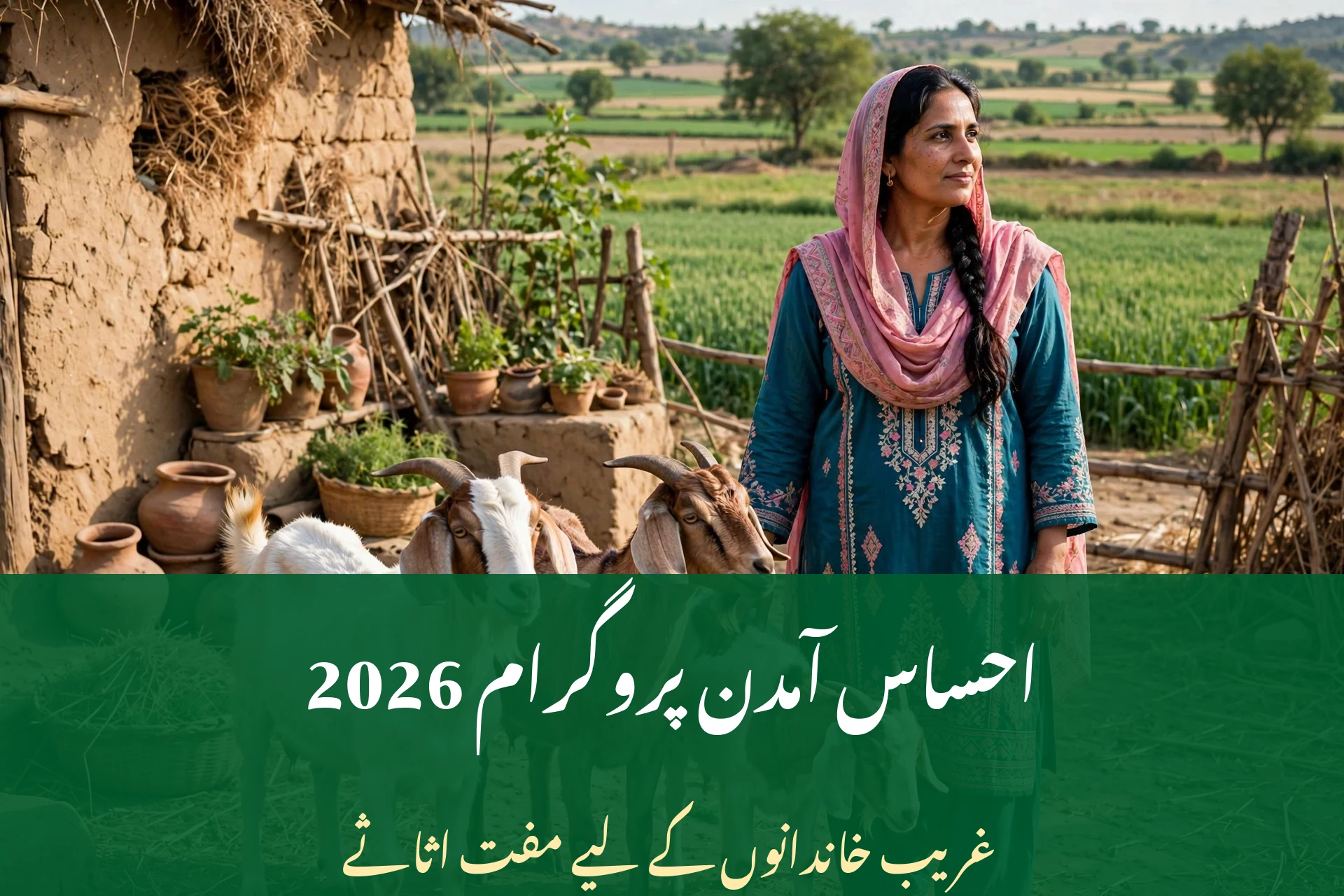
The Ehsaas Amdan Program 2026 is widely searched and widely misunderstood. Many websites claim fresh registration is open this year. It is not.
Ehsaas Amdan was a federal asset-transfer programme. Instead of monthly cash, it gave poor households an income-earning asset, such as goats, a rickshaw body, farming inputs, or shop stock.
Quick Overview
| Detail | Information |
|---|---|
| Program | Ehsaas Amdan (Income) Programme |
| Benefit type | Free income-earning asset, not a cash payment |
| Assets given | Livestock, poultry, rickshaw body, farming inputs, small-shop stock |
| Launched | 21 February 2020, Layyah, Punjab |
| Original budget | Rs. 15 billion over four years |
| Original target | More than 200,000 assets |
| Coverage | 375 rural union councils in 23 poor districts |
| Implementing agency | Pakistan Poverty Alleviation Fund (PPAF) |
| Selection | Poverty Score Card survey and community process |
| 2026 new registration | Not officially announced |
| Check method | SMS CNIC to 8171 or 8171.bisp.gov.pk |
| Helpline | 0800-26477 |
| Cost | Completely free |
Latest Update 2026: Read This First
As of October 2026, no new nationwide Amdan registration round for 2026 has been announced on bisp.gov.pk or in a government press release.
The original programme ran from 2020 to 2023. Since its Layyah launch, no fresh Amdan launch, district list, or application form for 2026 has been published. Any post promising a guaranteed 2026 asset for a fee is not quoting an official announcement.
If a new round is announced, it will appear on bisp.gov.pk or through an official press release first. Until then, keep your household record updated in the NSER dynamic survey and ignore paid offers.
What Is the Ehsaas Amdan Programme?
Ehsaas Amdan, meaning “Ehsaas Income”, was part of the Ehsaas welfare umbrella, aimed at creating livelihood opportunities for the most disadvantaged people.
Unlike cash programmes, Amdan handed over a productive asset: goats to breed and sell, a rickshaw body for daily fares, or shop inputs for a village business.
Each household first prepared a Livelihood Investment Plan with programme staff, matching the asset to the family’s skills and local market. The asset was bought locally and handed over free of cost. It was a grant, not a loan, and never had to be repaid. Households could also be linked to the interest-free loan window, where available, but a loan was never a condition for receiving an asset. Training on using the asset was part of the design.
What Assets Were Given?
- Livestock: goats, cows, buffaloes, and poultry for milk, breeding, or egg income.
- Chingchi rickshaw bodies: for passenger or goods transport work in rural areas.
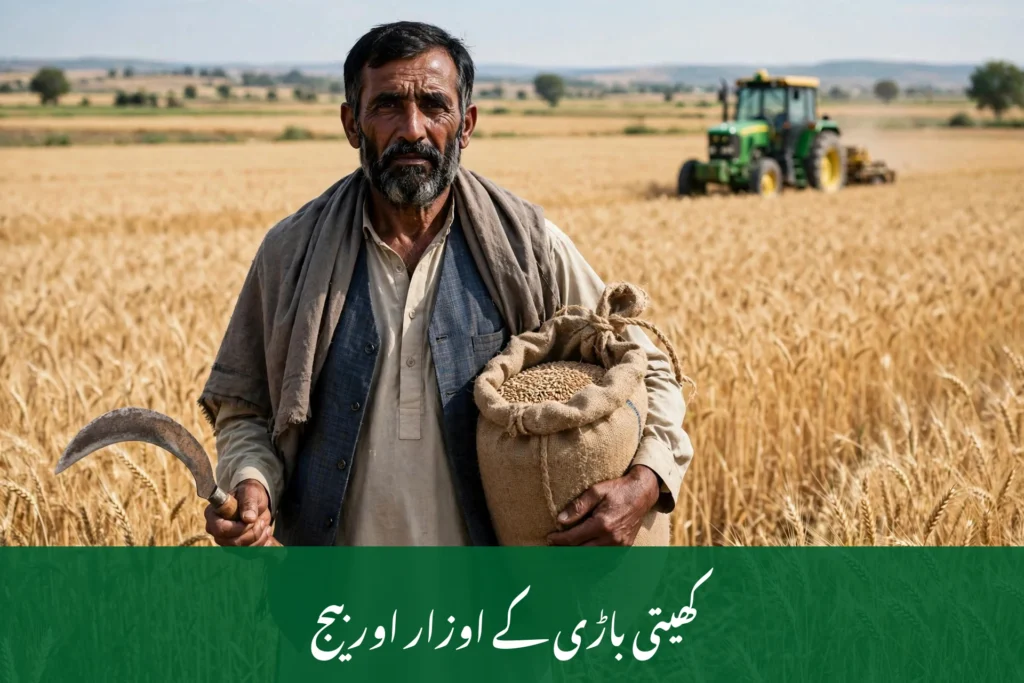
- Agricultural inputs: seeds, fertiliser, and small farming equipment for families with land.
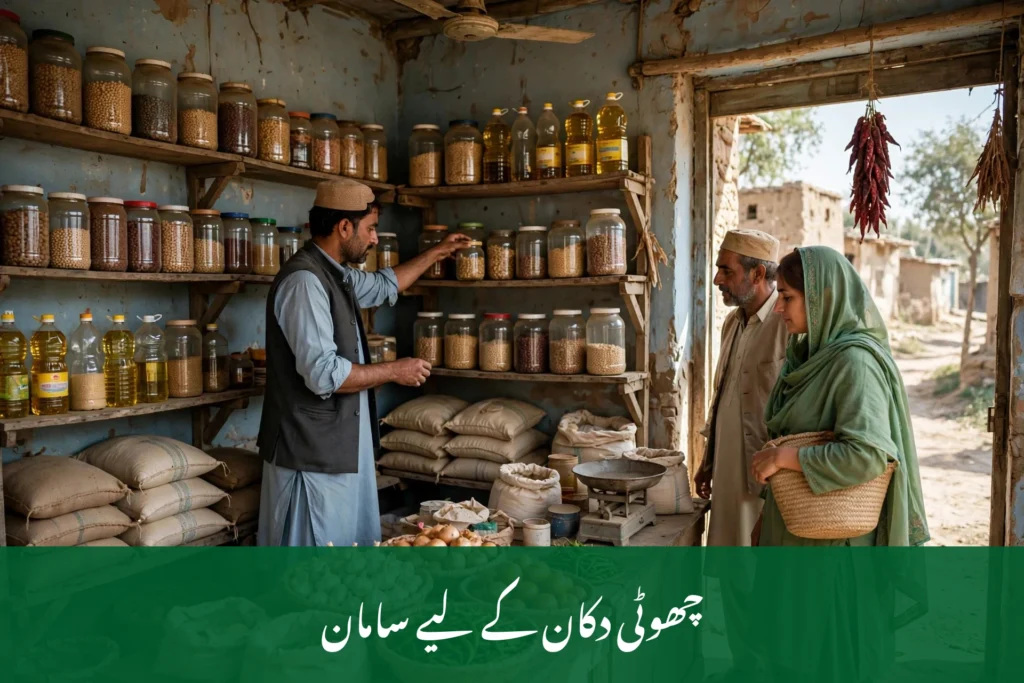
- Small retail inputs: stock and basic equipment for a small shop or home business.
At the Layyah launch, assets worth around Rs. 60,000 each were given to selected beneficiaries. That was the original programme’s launch figure, not a 2026 payment; values were set locally.
Who Was Eligible?
Beneficiaries were identified through the Poverty Score Card survey and a community process in the selected union councils, not by walk-in applications.
- The household lived below the poverty line in a selected union council.
- The household appeared in the poverty survey record for that area.
- The household had no regular, reliable source of income.
- Women and young people were given priority.
- The household could manage the asset, or was willing to learn how.
Launch reports described women and young beneficiaries as a major share of the target group, though different official-era releases quoted the shares differently. One firm limit mattered most: if your union council was not among the 375 selected, your household could not receive an Amdan asset under that round, even if you were poor.
Benefit and Asset Details
| Item | Detail |
|---|---|
| Type of support | One income-earning asset per household |
| Repayment | None — a grant, not a loan |
| Cash payment | No monthly or quarterly cash under Amdan |
| Asset value at launch | Around Rs. 60,000 per asset |
| Training | Asset-use and business-planning training |
| Loan link | Interest-free loan window, only where available |
| Coverage | 375 rural union councils in 23 districts |
Do not confuse Amdan with Benazir Kafaalat, a quarterly cash programme for women. Amdan was an asset programme, so a message about an “Amdan qist” at a campsite does not fit. For Kafaalat payments, see our guide on the BISP Kafaalat December 2026 payment.
Important Dates
| Event | Date / Status |
|---|---|
| Programme launch | 21 February 2020, Layyah |
| Original programme period | Four years, 2020 to 2023 |
| Original budget | Rs. 15 billion |
| Target | More than 200,000 assets |
| New Amdan round for 2026 | Not officially announced |
| New Amdan district list for 2026 | Not officially announced |
| New Amdan application form for 2026 | Not officially announced |
| BISP status check | Available throughout 2026 |
| NSER dynamic survey | Open at BISP Tehsil Offices during 2026 |
How to Check Your Status in 2026
There is no official Amdan online application for 2026. You can only check whether your household is recorded in the BISP system.
- SMS check: Send your 13-digit CNIC number, without dashes, to 8171. Trust only replies from 8171.
- Portal check: Visit 8171.bisp.gov.pk, enter your CNIC, solve the captcha, and view your status.
- Read the reply: It may say eligible, not eligible, or that a survey is needed.
- No record? Visit your nearest BISP Tehsil Office and ask for the NSER dynamic survey, bringing your original CNIC.
- Old data? Ask for a re-survey if your income, family size, or address has changed.
- Wait for an official SMS: Only an SMS from 8171 confirms a change. No agent can speed this up.
- Ask locally which livelihood, loan, or skills programmes are active in your district.
Earlier beneficiaries with asset problems should visit the Tehsil Office or call 0800-26477.
Required Documents
- Original valid CNIC of the household head, preferably the woman head.
- Children’s B-Forms from NADRA, if applicable.
- A mobile number registered in your own name.
- Proof of residence, such as a utility bill, if asked.
- Disability certificate, or death certificate of the husband for widows, if asked.
- Any earlier programme paper, asset receipt, or survey slip you hold.
The survey is free; never pay an agent to prepare documents.

How Selection and Distribution Worked
- District selection: PPAF chose the poorest districts by poverty and food insecurity.
- Union councils: 375 rural union councils were chosen inside those 23 districts.
- Poverty survey: Households were surveyed with the Poverty Score Card.
- Community check: Local institutions confirmed the most deserving households.
- Livelihood plan: Each household planned which asset suited its skills and area.
- Local purchase: The village organisation bought the asset locally.
- Distribution: Assets were handed over at an event, free of cost.
- Training: Beneficiaries learned to use the asset and plan the business.
Partners under PPAF included the National Rural Support Programme, Balochistan Rural Support Programme, Sindh Rural Support Organization, Thardeep, LASOONA, and SABAWON.
Districts Covered by the Original Programme
- Punjab: Dera Ghazi Khan, Jhang, and Layyah.
- Khyber Pakhtunkhwa: Upper Kohistan, Lower Kohistan, Palas Kolai, Torghar, Batagram, Shangla, North Waziristan, South Waziristan, Dera Ismail Khan, and Tank.
- Balochistan: Zhob, Gwadar, Lasbela (Jhal Magsi and Sherani in later releases).
- Sindh: Badin, Thatta, Sujawal, Kashmore, Shikarpur, Tharparkar, and Umerkot.
If your district is not listed, your household was not covered by the original round, and no agent can fix that for a fee. Ask your Tehsil Office about programmes in your district, such as the Akhuwat interest-free loan scheme 2026.

Amdan Compared With Similar Support
| Programme type | What you get | Repayment |
|---|---|---|
| Ehsaas Amdan | A free asset such as livestock or a rickshaw | No repayment |
| Interest-free loan | Cash loan for business | Repaid, without interest |
| Kafaalat cash support | Quarterly cash payment to women | No repayment |
| Skills training | A course and certificate | No repayment |
If a scheme asks you to repay an “Amdan asset” monthly, it is not the original programme. Alternatives: the Akhuwat interest-free loan scheme 2026, Pakistan Bait-ul-Mal financial assistance 2026, and the PM Youth Skill Development Program 2026 NAVTTC.
Common Problems and Fixes
| Problem | Real cause | Exact fix |
|---|---|---|
| Agent promises a 2026 Amdan asset for a fee | No new 2026 round is officially announced | Do not pay. Report at the Tehsil Office, call 0800-26477 |
| SMS from an unknown number says your asset is ready | Only 8171 is official | Delete it. Never share CNIC or PIN with that number |
| 8171 says no record found | Household never surveyed | Complete the NSER dynamic survey at the Tehsil Office |
| 8171 says not eligible | Score or data below threshold | Update your survey if circumstances changed |
| Someone asks for your PIN or OTP | This is fraud | Never share them. No official asks for them |
Fraud Warning
Amdan’s name is widely misused by fraudsters, so remember:
- Only SMS from 8171 is official. Any other number is not BISP.
- Registration, surveys, and status checks are completely free. A fee demand is fraud.
- There is no official Amdan online form for 2026. A site charging a “processing fee” is not official.
- Never share your CNIC copy, bank PIN, mobile OTP, or wallet password with anyone.
- Never hand your original CNIC to an agent. Show it at the office yourself.
- If someone visits your home claiming to be from Amdan, verify their organisation at the Tehsil Office first.
If you already paid someone, keep the receipt as evidence and report it at the Tehsil Office or on 0800-26477.
Tips for Beneficiaries
- Pick an asset you can manage. Goats need daily care; a shop needs a good location.
- Do not sell the asset in the first crisis. Its purpose is steady income, not a one-time payment.
- Keep a simple record of weekly earnings and spending.
- Attend the training. Animal vaccination and shop bookkeeping basics prevent common losses.
- Keep your BISP record updated. Report changes in family size, income, or address.
- Plan for slow seasons by saving part of good weeks.

Frequently Asked Questions
1. What is the Ehsaas Amdan Program?
The Ehsaas Amdan Program was a federal livelihood programme that gave small income-earning assets to very poor households instead of cash. Assets included livestock, poultry, rickshaw bodies, farming inputs, and small-shop stock. Each asset was free, and households received training to turn it into steady income.
2. Is there a new Ehsaas Amdan registration in 2026?
No new nationwide Ehsaas Amdan registration round for 2026 has been officially announced on bisp.gov.pk or in a government press release as of October 2026. Websites claiming open Amdan registration this year are not quoting an official announcement. Keep your NSER record updated and wait for an official notice.

3. What assets did Ehsaas Amdan give to families?
The programme gave livestock such as goats, cows, buffaloes, and poultry, bodies of Chingchi rickshaws, agricultural inputs like seeds and small equipment, and inputs for small retail outlets and home businesses. The asset was chosen through a household livelihood plan, so it matched the family’s skills and local market.
4. Who was eligible for the Ehsaas Amdan Program?
Eligibility was based on the Poverty Score Card survey and a community process in 375 selected rural union councils across 23 poor districts. Households below the poverty line with no reliable income were chosen, with priority for women and young people. Living outside the selected areas meant exclusion from that round.
5. Which districts were covered by Ehsaas Amdan?
The original programme covered 23 districts, including Dera Ghazi Khan, Jhang, and Layyah in Punjab, ten districts in Khyber Pakhtunkhwa, three in Balochistan, and seven in Sindh such as Badin, Thatta, and Tharparkar. A later official-era release also named Jhal Magsi and Sherani in Balochistan, so check your Tehsil Office for local confirmation.
6. How can I check my eligibility status in 2026?
Send your 13-digit CNIC number without dashes to 8171, or visit 8171.bisp.gov.pk and enter your CNIC with the captcha code. The reply shows whether your household is recorded and eligible, not eligible, or needs a survey. This check covers your BISP record, not a separate Amdan application, because no Amdan online form exists.
7. Was the Amdan asset free, or did families have to repay it?
The asset was completely free and did not have to be repaid. It was a grant, not a loan. Households could separately be linked to an interest-free loan window if they wanted extra finance to grow the business, but that loan was optional and separate. Anyone demanding repayment for an Amdan asset should be reported.
8. What documents do I need for the survey and status check?
You need your original valid CNIC, a mobile number registered in your own name, and children’s B-Forms if applicable. A utility bill, disability certificate, or widow’s death certificate may be asked for in specific cases. The survey is free, and you should never pay an agent to prepare or submit these documents.
9. What should I do if someone asks for money for Amdan registration?
Do not pay, and do not share your CNIC copy, bank PIN, or mobile OTP. Registration and surveys are free, and only SMS from 8171 is official. Report the person at your nearest BISP Tehsil Office and call the helpline on 0800-26477. Keep any message or receipt as evidence for your complaint.

Conclusion
The Ehsaas Amdan Program 2026 remains a powerful idea: give a poor family a real way to earn, not just a one-time payment. The right asset, plus training, can change a household’s future.
But no new Amdan round for 2026 has been officially announced, and no official online form exists. Keep your NSER record updated, check only through 8171 and the portal, and never pay anyone promising an asset.
Disclaimer: This information is based on official BISP and government announcements available as of October 2026 and may change. Programme details, district lists, and future rounds are confirmed only through bisp.gov.pk or an official press release. Always verify your status through 8171 or the official portal before acting on any claim.

