
Punjab Sehat Card 2026 is the name families still use for Punjab’s Health Insurance Program, run by the Punjab Health Initiative Management Company (PHIMC). The program has not closed. It now works at empanelled private hospitals only, and your original CNIC works as your card. This guide explains who is covered, what treatment is free, what needs a 50% payment, and how to check your status on the official helpline before you travel to a hospital.
Quick Overview
| Detail | Information |
|---|---|
| Scheme | Sehat Sahulat Program, Punjab |
| Current Official Name | Health Insurance Program |
| Run By | Punjab Health Initiative Management Company (PHIMC), Government of Punjab |
| Status 2026 | Active at empanelled private hospitals. Closed in government hospitals from 30 June 2025 |
| Who Is Covered | All permanent residents of Punjab |
| Treatment Limit | Rs. 60,000 per family per year for secondary care, Rs. 400,000 per family per year for priority care, extendable to Rs. 1,000,000 in special cases |
| Check Method | Call PHIMC helpline 0800-07542, or ask the Hospital Facilitation Officer at an empanelled hospital |
| Helpline | 0800-07542 (24 hours). Other lines: 0333-6756390, 042-99066000, 042-99066001 (Monday to Saturday, 8:00 AM to 11:00 PM) |
| Cost | No registration fee, no premium, no application form |
| Card Needed | No separate card. Your original CNIC is your card |
What Changed and What Is the Current Status?

Many families heard in 2025 that the Sehat Card had ended. That news was only half true.
PHIMC states in its official FAQ that the Health Insurance Program has not been stopped. It was discontinued in government hospitals only. Treatment there was already free, and PHIMC says it still remains free. The change took effect on 30 June 2025, as reported by Dawn from a PHIMC notification to government hospitals.
The program now continues at empanelled private hospitals across Punjab. That private hospital part was always its main feature, and it is still working.
One change matters for your pocket. Treatment is not fully free for every disease at a private hospital now. Cancer, ICU, CCU, NICU, medical cases, thalassemia, and all emergency services are free. For other conditions, the program pays 50% and the family pays 50%. Ask about this before admission, not after discharge.
Separate Chief Minister programs for children’s heart surgery, cancer, dialysis, transplants, and stroke also run in Punjab. They have their own rules and replaced card based treatment inside government hospitals. The hospital or PHIMC helpline will guide you if your case fits one of them.
There is no new “Maryam Nawaz Health Card” registration for this scheme. Not officially announced. No new apply date or fresh registration drive was found on PHIMC’s official pages in October 2026.
Who Is Eligible for Punjab Sehat Card 2026?
PHIMC’s rule is simple. All permanent residents of Punjab are eligible for the Health Insurance Program.
There is no income test, no PMT score, and no BISP condition for this scheme. It is separate from BISP 8171. A family does not need to receive BISP money to use it, and a BISP family gets no extra limit under it.
A family means:

- Husband and wife
- Their unmarried children
- A newborn baby, added automatically if the baby is born in an empanelled hospital
Married children are not part of their parents’ family here. They form their own family in NADRA records.
PHIMC also states there is no family size limit, and diseases you already have are covered. Your family data comes from NADRA, so your marriage, children, and Punjab address must be correct there. Most eligibility problems start at NADRA, not at the hospital.
Benefits and Treatment Covered
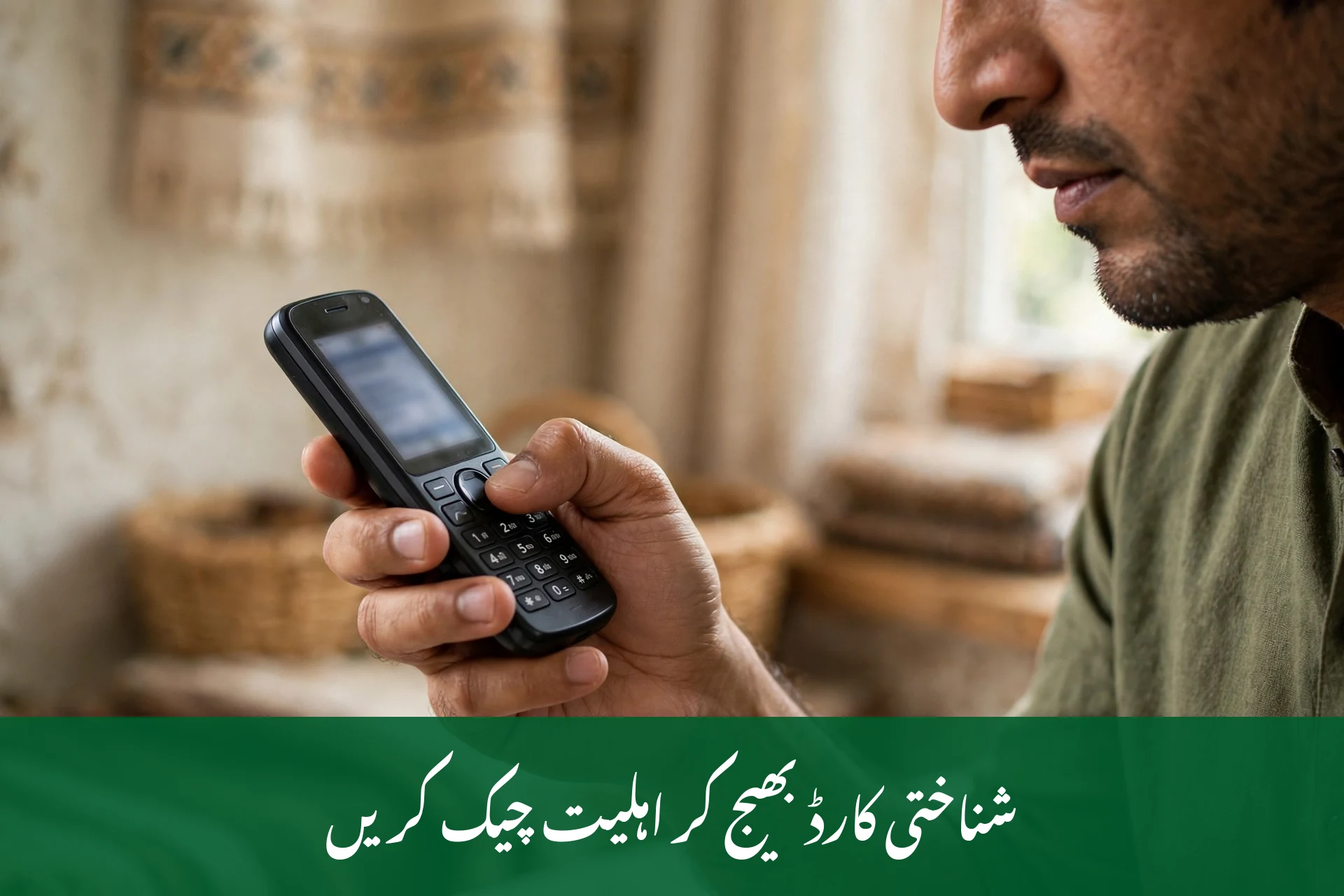
Only admitted patients are covered. A simple clinic visit, called OPD, is not covered.
| Treatment or Service | Covered? | What the Family Pays |
|---|---|---|
| Cancer treatment, including surgery, chemotherapy, and radiotherapy | Yes, admitted cases | Free at empanelled private hospitals |
| ICU, CCU, and NICU care | Yes | Free |
| Medical cases (admission without surgery) | Yes | Free |
| Thalassemia treatment | Yes | Free |
| All emergency services | Yes | Free |
| Heart procedures, angioplasty and bypass | Yes | Ask the hospital first. Free if classed as emergency or medical, otherwise 50% |
| Other admitted medical and surgical treatment | Yes | Program pays 50%, family pays 50% |
| Fractures and injuries | Yes | 50% in most cases, free in emergencies |
| Diabetes complications needing admission | Yes | 50% in most cases, free in emergencies |
| Burns and road accident treatment to save life or limb, including prosthesis | Yes | Free in emergencies |
| Chronic infections such as Hepatitis, HIV, and rheumatology cases | Yes | 50% in most cases |
| Neurosurgical procedures | Yes | 50% in most cases, free in emergencies |
| Medicines, lab tests, and diagnostics | Only if you are admitted | Same rule as your case, free or 50% |
| OPD visits | No | Full cost |
| Normal delivery and C-section | No | Not covered under this program |
| Cosmetic procedures, dental treatment, eyeglasses | No | Full cost |
| Drug addiction treatment, self-inflicted injuries | No | Full cost |
If your limit ends while you are admitted, treatment continues until you recover. Life threatening treatment is also covered after the limit is used. Unused cover has no cash value. One day of costs before admission and up to five days after discharge are covered, and treatment can be taken at an empanelled hospital anywhere in Pakistan.
How to Check Eligibility

PHIMC lists two official ways to confirm your status for Punjab. Use only these.

- Call the PHIMC helpline 0800-07542. It works 24 hours. Keep your CNIC ready and ask if your family is active, how much limit is left, and which nearby hospital is on the panel.
- If that line is busy, call 0333-6756390, 042-99066000, or 042-99066001, Monday to Saturday, 8:00 AM to 11:00 PM.
- Or visit an empanelled hospital and ask the Hospital Facilitation Officer to check your CNIC in the system.
- If you are a permanent Punjab resident but shown as ineligible, update your family data at the nearest NADRA office. PHIMC says eligibility is corrected after NADRA updates the record.
A warning about SMS codes. Old articles tell Punjab families to send their CNIC to 8500. That code belongs to the older federal Sehat Sahulat system, and PHIMC’s current FAQ for Punjab lists no SMS code. It lists only the helplines above. Do not depend on 8500 alone for a Punjab case in 2026. If an old SMS reply and the helpline disagree, follow the helpline, because PHIMC runs the Punjab program.
How to Get Treatment at a Hospital
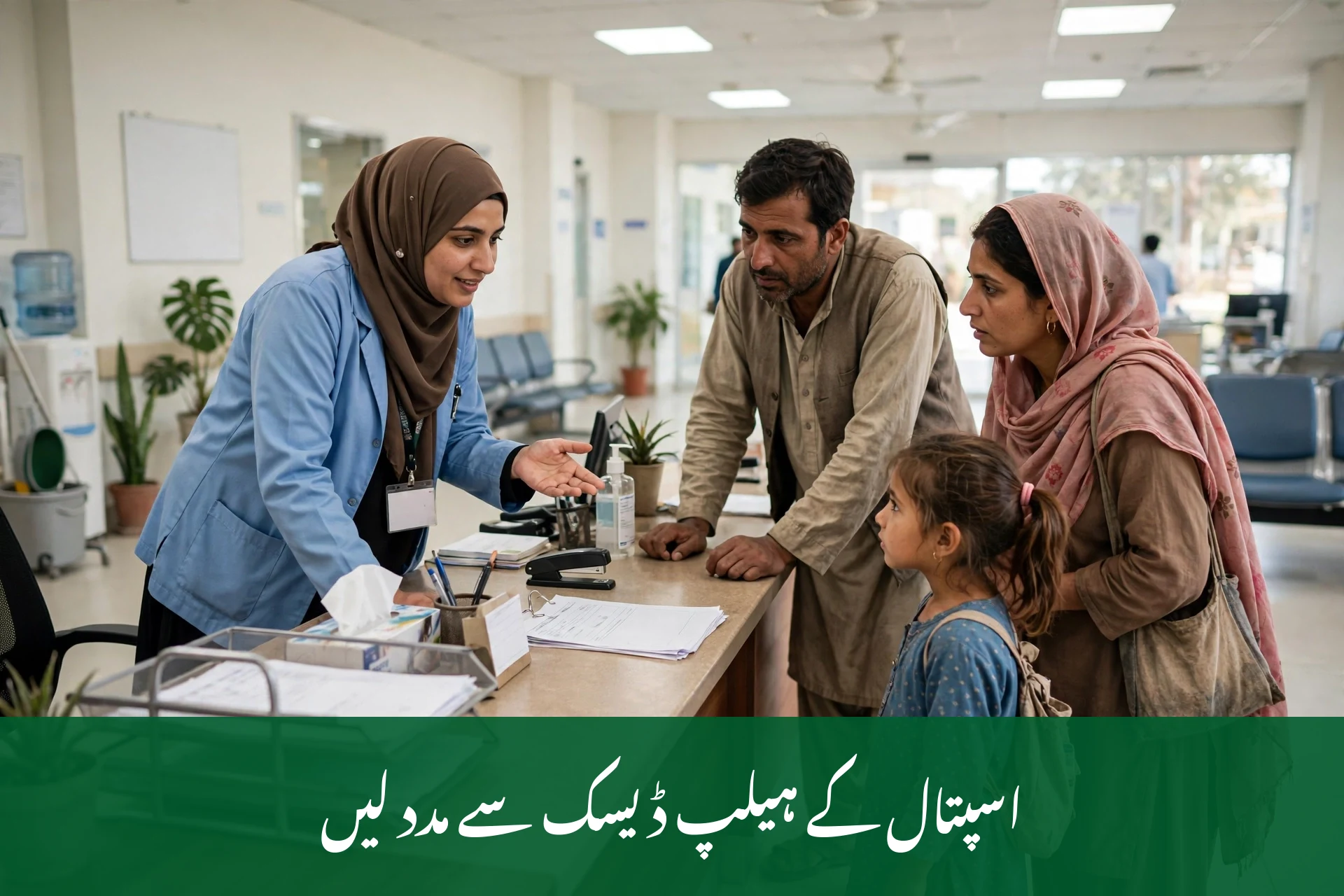
- Confirm the hospital is on PHIMC’s current empanelled list. Panel hospitals change, so check before you travel.
- Call the hospital or the PHIMC helpline and confirm they are taking program patients for your disease.
- Take your original CNIC. A photocopy is not enough. For a child under 18, take the B-Form as well.
- At the hospital, go straight to the Hospital Facilitation Officer or program helpdesk. Do not start through the normal private counter before this check.
- The officer will check your CNIC, confirm your family record, and guide your admission.
- Before you agree, ask two questions. Is my case free or 50%? And how much of my family limit will it use? Get the answer in writing if the bill is large.
- Keep every paper, including the admission slip, bills, and discharge summary, until your case is closed.
For a baby not born in an empanelled hospital, give the B-Form at the hospital helpdesk. For a new wife or missing member, update the record at NADRA first. The data syncs with the program on its own.
Required Documents
- Original CNIC of the patient, or of the family head for a child patient
- B-Form for every child under 18, if the child was not born in an empanelled hospital
- Old medical reports and prescriptions, if you have them. They help the hospital decide admission quickly
Nothing else is required. No form, no slip, no fee. Anyone who asks for money to make, activate, or recharge your card is committing fraud. PHIMC has no agent system.
Empanelled Hospitals: How to Find the Official List
Use only the official list on the PHIMC website: https://phimc.punjab.gov.pk/empanelled-hopsitals
Open phimc.punjab.gov.pk, open the list of empanelled hospitals in Punjab under SSP, and check your district and the services that hospital offers. If you have no internet, call 0800-07542 and ask for the nearest panel hospital for your treatment.
Do not trust hospital lists copied on random websites. Old lists still show government hospitals that left the program in June 2025. Always confirm the hospital by phone before you leave home.
Punjab also runs a separate cancer initiative. See our guide to the CM Punjab Cancer Program 2026, and ask PHIMC which program fits your case.

Common Problems and Fixes
| Problem | Real Cause | Fix |
|---|---|---|
| System shows “not eligible” even though you live in Punjab | Family data or Punjab address is old or wrong in NADRA | Visit NADRA, correct your family record and address, then call 0800-07542 to confirm |
| Wife or child is missing from the family | Marriage or birth not updated with NADRA | Update the record at NADRA. Take the B-Form for a child under 18 to the hospital helpdesk |
| Hospital refuses admission | Case is OPD only, treatment is on the excluded list, or the limit is finished | Check these three points with the Hospital Facilitation Officer. If the refusal still looks wrong, call 0800-07542 from the hospital |
| Hospital demands full payment | Case may be in the 50% group, or staff have not checked your CNIC in the system | Ask the officer to check your CNIC first and give a written breakdown. Do not pay for cancer, ICU, CCU, NICU, medical, thalassemia, or emergency care, which PHIMC lists as free |
| Family data is wrong in NADRA | Wrong family head, child shown as married, or a death not recorded | Get it corrected at NADRA. No hospital can fix this at its desk |
| Confusion between Sehat Card and BISP 8171 | Both use CNIC, but they are different programs run by different departments | Health cover is from PHIMC Punjab. BISP cash is a separate program. For BISP payment complaints, use the BISP 8171 helpline guide, not the PHIMC helpline |
| Delivery case is refused | Normal delivery and C-section are excluded from this program | Government hospitals still give free treatment. Mothers can also check Punjab support under the CM Punjab Aghosh Program 2026 |
| A person with a disability needs support beyond treatment | This program only pays hospital bills | Punjab’s separate card for persons with disabilities is covered in our Himmat Card 2026 guide |
Tips for Families
- Check your NADRA family record once a year, even when nobody is sick. A missing wife or child is easy to fix on a normal day and hard on an emergency night.
- Call the helpline or hospital before a planned operation. Confirm panel status and whether your case is free or 50%.
- In an emergency, go to the nearest empanelled private hospital and ask for the Hospital Facilitation Officer first. Emergency services are listed as free.
- Never give your CNIC copy or OTP to an agent who promises to increase your limit. No one can do that for money.
- Note how much limit your family has used after every admission. The limit is shared by the whole family for the year.
- If a hospital refuses a valid case, note the date and hospital name, then complain on 0800-07542 or at complaints.punjab@phimc.punjab.gov.pk.
FAQs
1. Is Punjab Sehat Card 2026 still working or has it closed?
It is still working. PHIMC states in its official FAQ that the Health Insurance Program has not been stopped. It was discontinued in government hospitals from 30 June 2025, where treatment remains free anyway. It continues at empanelled private hospitals across Punjab for all permanent residents.
2. What is the official name of the Punjab health card in 2026?
The official name used by PHIMC is the Health Insurance Program. People still call it the Punjab Sehat Card, Sehat Card, or Sehat Sahulat Program, and older papers also used the name Universal Health Insurance. All these names point to the same Punjab program run by PHIMC.
3. How much treatment does one family get in a year?
Each family gets Rs. 60,000 per year for secondary care and Rs. 400,000 per year for priority care. PHIMC says the cover can be extended up to Rs. 1,000,000 in special cases. If the limit ends during an admission, treatment continues until recovery, and life threatening cases stay covered.
4. Do I need to apply or register for the Punjab Sehat Card 2026?
No. There is no application, no registration form, and no fee. PHIMC says your CNIC is your Health Insurance Program. If you are a permanent resident of Punjab with a correct NADRA family record, take your original CNIC to an empanelled hospital and the officer will check and guide you.
5. How can I check my eligibility for the Punjab program?
Call the PHIMC helpline 0800-07542, which works 24 hours, and ask with your CNIC ready. You can also ask the Hospital Facilitation Officer at an empanelled hospital to check your CNIC. PHIMC’s current FAQ lists no SMS code for Punjab, so do not rely only on old SMS instructions.
6. Is all treatment free under this program?
No. At empanelled private hospitals, cancer, ICU, CCU, NICU, medical cases, thalassemia, and all emergency services are free. For other conditions, the program pays 50% of the cost and the family pays 50%. OPD visits, normal delivery, and C-sections are not covered at all under this program.
7. Which documents should I take to the hospital?
Take your original CNIC. A photocopy does not work for program verification. For a child under 18, also take the child’s B-Form, mainly when the child was not born in an empanelled hospital. Carry your old reports and prescriptions too, because they help the doctor decide your admission quickly.
8. What should I do if a hospital refuses my treatment?
First check that your case needs admission, is not on the excluded list, and your limit is not finished. Then speak to the Hospital Facilitation Officer at that hospital. If the refusal still seems wrong, call PHIMC on 0800-07542 or 0333-6756390 and complain while you are still at the hospital.

9. Is the Punjab Sehat Card the same as BISP 8171?
No. They are fully separate programs. Punjab Sehat Card 2026 is health insurance from the Punjab government through PHIMC, and it pays hospital bills only. BISP 8171 is a federal cash program for poor families. Having one does not change the other, and neither program can fix a problem in the other.
Conclusion
Punjab Sehat Card 2026, officially the Health Insurance Program, is active for every permanent Punjab family at empanelled private hospitals. Your CNIC is your card, yearly cover is Rs. 60,000 for secondary care and Rs. 400,000 for priority care, and cases like cancer and emergencies are free. Keep your NADRA record correct, confirm your hospital on 0800-07542, and never pay an agent.
Sources
- Punjab Health Initiative Management Company (PHIMC), Frequently Asked Questions in English — https://phimc.punjab.gov.pk/faqe
- Punjab Health Initiative Management Company (PHIMC), Official Website and Helplines — https://phimc.punjab.gov.pk/
- Punjab Health Initiative Management Company (PHIMC), List of Empanelled Hospitals in Punjab under SSP — https://phimc.punjab.gov.pk/empanelled-hopsitals
- Dawn (report on PHIMC notification closing Universal Health Insurance in public hospitals on 30 June 2025, republished) — https://www.thefreelibrary.com/Health+insurance+closed+at+public+hospitals+to+promote+CM%27s.-a0845973394
- TechJuice, Punjab Govt Clarifies Rumors on Sehat Card Services (PHIMC clarification) — https://www.techjuice.pk/punjab-govt-clarifies-rumors-on-sehat-card-services/
Disclaimer: This information is based on official Punjab Health Department and PHIMC announcements available in October 2026 and may change. Coverage, hospital panels, and payment shares change with government policy, so always verify your case from official Punjab Health Department and PHIMC sources, or on the PHIMC helpline 0800-07542, before starting treatment. This website is not affiliated with the Government of Punjab or PHIMC.


6 thoughts on “Punjab Sehat Card 2026: Health Insurance Program for Eligible Families, Complete Treatment Guide”