
Federal Sehat Sahulat Programme Pakistan 2026 is the federal government’s free hospital treatment scheme for permanent resident families of Islamabad, Azad Jammu and Kashmir, and Gilgit-Baltistan. It is not a cash payment, and it is not the same as the Punjab or Khyber Pakhtunkhwa health cards. Your CNIC is your card, and treatment is given at empanelled hospitals without you paying the hospital bill for covered treatment.
Quick Overview
| Detail | Information |
|---|---|
| Programme name | Federal Sehat Sahulat Programme |
| Run by | Ministry of National Health Services, Regulations and Coordination |
| Implemented with | State Life Insurance Corporation and NADRA |
| Covered areas | Islamabad Capital Territory (ICT), Azad Jammu and Kashmir (AJK), Gilgit-Baltistan (GB) |
| Who is covered | All permanent resident families of ICT, AJK and GB, as verified by NADRA records |
| What it pays for | Inpatient hospital treatment at empanelled hospitals |
| Card needed | No separate card in most cases; your original CNIC works as your card |
| Eligibility check | SMS your CNIC number to 8500, or ask the Sehat Sahulat desk at an empanelled hospital |
| Reported helpline | 0800-09009 |
| Registration fee | None; the programme is free for eligible families |
| Current phase | Relaunched 16 January 2026, extended through 30 June 2027 |
Latest Update
The federal programme was relaunched on 16 January 2026, following the 34th National Steering Committee meeting chaired by the National Health Services Minister on 12 January 2026.
The committee approved a revised PC-I of around Rs. 40 billion, extending the programme through 30 June 2027. The aim is free hospitalisation for eligible permanent resident families of ICT, AJK and GB under a universal health coverage model.
Existing contracts with State Life and NADRA were extended, and outstanding liabilities were to be cleared from the Public Sector Development Programme.
This federal programme does not replace the provincial schemes. Punjab runs its own Health Insurance Program through PHIMC, and KP runs Sehat Card Plus. If you live in Punjab or KP, use your province’s scheme. See our guides to the Punjab Sehat Card 2026 and KP Sehat Card Plus 2026.
Eligibility Criteria
Eligibility is based on residence and NADRA records, not on a separate application form.
You are eligible if:

- You are a permanent resident of Islamabad Capital Territory, Azad Jammu and Kashmir, or Gilgit-Baltistan.
- Your family record is present and correct in NADRA data.
- You hold a valid CNIC, and your family members are recorded under the same family record.
- Your CNIC status is active in NADRA records.
A family generally means husband, wife, and unmarried children in NADRA records. Married children form their own family in NADRA records, so they are checked under their own record.
Children are covered through their parents’ record. Carry the child’s B-Form at admission.
No separate income test was announced for this federal phase, because coverage is described as universal for permanent residents of the three areas. If your NADRA record is wrong, your check can fail even if you live in a covered area, so fix it first.
People living in Punjab, Sindh, Balochistan, or Khyber Pakhtunkhwa are not covered by this federal phase, even if they are in Islamabad for treatment. Your home province’s scheme applies to you instead.
Benefit and Coverage Table
The federal programme covers inpatient treatment, where you are admitted to hospital. Ordinary outpatient clinic visits, where you are seen and sent home the same day, are not its main focus.
| Treatment type | Covered under the federal programme |
|---|---|
| Secondary care | General medical admissions, minor surgeries, and routine inpatient procedures |
| Priority and tertiary care | Major surgeries, cardiac treatment, cancer treatment, dialysis, ICU care, and other critical inpatient care |
| Emergency inpatient care | Accident and emergency cases that need admission |
| Maternity inpatient care | Delivery and related inpatient maternity care at empanelled hospitals |
| Diagnostic tests during admission | Tests ordered by the hospital during an inpatient stay |
| Medicines during admission | Medicines given during inpatient treatment |
| Outpatient (OPD) visits without admission | Not the main benefit; confirm at the hospital desk first |
| Treatment outside Pakistan | Not covered |
| Cosmetic treatment without a medical reason | Not covered |
A note on coverage limits
Blog posts quote different annual limits for this programme, and the figures do not agree. The exact 2026 per-family annual limit for the federal phase could not be verified on an official federal source at the time of writing, so this guide does not print a figure. Before admission, ask the Sehat desk to confirm your remaining coverage in writing.
Important Dates
| Event | Date |
|---|---|
| Federal programme relaunched | 16 January 2026 |
| Steering committee approval of the revised phase | 12 January 2026 |
| Revised PC-I approved | Around Rs. 40 billion |
| Current phase runs through | 30 June 2027 |
| New registration deadline | Not officially announced; there is no separate registration form, so no deadline applies to a CNIC check |
| Hospital list update | Not officially announced; confirm empanelment before admission |
How to Check Eligibility, Get Your Card, and Use It at a Hospital
There is no long registration form. Your CNIC is the key document, and eligibility is checked against NADRA records.

Check eligibility by SMS
- Open the SMS app on your mobile phone.
- Type your 13-digit CNIC number without dashes or spaces.
- Send the message to 8500.
- Wait for the official reply about your eligibility status.
- If the reply says you are eligible, keep it safe and take your original CNIC to an empanelled hospital when needed.
Note that 8500 is the widely reported check code for the federal and Punjab schemes, while KP residents use 9780 for Sehat Card Plus. If the 8500 reply is unclear, confirm your status at the hospital desk instead of trusting a forwarded message.
Get your card
- No separate card application is needed in most cases.
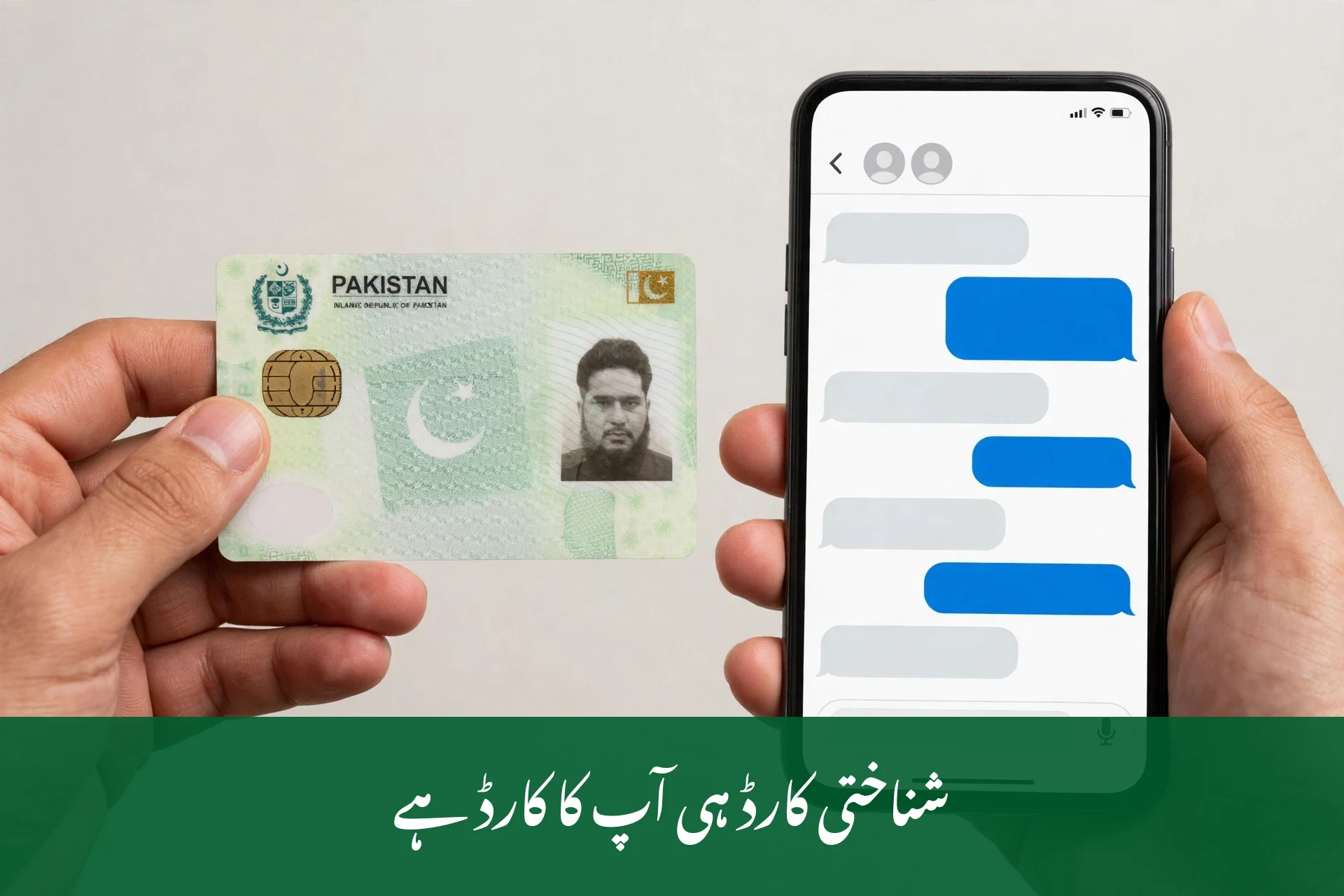
- Your original, valid CNIC works as your Sehat Card.
- If a programme office issues a physical card, take it if offered, but never pay for it.
- Keep your CNIC safe. A lost or expired CNIC will slow down verification at the hospital.
Use the programme at a hospital
- Confirm the hospital is empanelled for the federal programme before you travel.
- Go to the Sehat Sahulat desk inside the hospital with the patient’s original CNIC.
- Staff will verify eligibility and family details from NADRA records.
- The doctor will confirm whether admission is needed and whether the case is covered.
- If approved, treatment starts without you paying the covered hospital bill upfront.
- Keep the admission slip, discharge summary, and any receipts given to you.
- If the hospital asks you to pay for a covered treatment, ask for the reason in writing and call 0800-09009 before paying.
Required Documents
Carry originals, not photocopies alone.
- Original CNIC of the patient.
- Original CNIC of the family head, if the patient is a child or a dependent.
- B-Form for children who do not yet have a CNIC.
- Family Registration Certificate (FRC) from NADRA, if the hospital asks for family proof.
- Previous medical reports, test results, and prescriptions related to the illness.
- Referral slip, if another doctor has referred you to that hospital.
- Discharge papers from any earlier admission for the same illness, if available.
If your CNIC address, marital status, or children’s record is wrong in NADRA, correct it at a NADRA centre before a planned admission. In an emergency, go to the hospital desk first and explain the problem there.
Process: From Check to Discharge
- Check eligibility. Send your CNIC to 8500, or confirm at a hospital desk.
- Correct NADRA records if needed. Update address, marriage, or children’s details before planned treatment.
- Choose an empanelled hospital. Confirm it covers your treatment under the federal programme.
- Visit the Sehat Sahulat desk. Present the patient’s original CNIC and B-Form for children.
- Get medical assessment. The doctor decides if admission is needed and if the case is covered.
- Admission and treatment. Covered treatment is given without upfront payment of the covered bill.
- Discharge. Collect the discharge summary and confirm no covered charge is left in your name.
- Follow-up. Ask what follow-up visits are covered, and keep all papers for your record.
Common Problems and Fixes
| Problem | What to do |
|---|---|
| SMS to 8500 says not eligible, but you live in ICT, AJK, or GB | Check your NADRA record first. A wrong address or unrecorded family member is the most common cause. |
| CNIC is expired or blocked | Renew it at NADRA before planned treatment. In an emergency, go to the hospital desk and explain. |
| Hospital says it is not empanelled | Ask the desk for the nearest empanelled hospital, or call 0800-09009. |
| Hospital asks for payment for covered treatment | Ask for the reason in writing and call the reported helpline. Do not pay quietly. |
| Treatment limit is said to be finished | Ask for the remaining balance in writing. Do not accept a verbal refusal alone. |
| You live in Punjab or KP and are refused under the federal scheme | That refusal is correct for this scheme. Use your province’s programme instead. |
| Confusion with BISP 8171 | BISP cash and Sehat Sahulat health cover are different programmes. BISP is checked through 8171; health eligibility through 8500 and the hospital desk. |
Fraud Warning
The Federal Sehat Sahulat Programme is free for eligible families. There is no registration fee, card fee, or premium.
Never pay an agent to get a Sehat Card, add your name to a list, or speed up admission. No agent is needed.
Never share your CNIC copy, PIN, OTP, or bank details with anyone who calls or messages about a health card. The programme does not ask for these by phone or WhatsApp.
If someone promises a health card for money, or sends a fake SMS with a payment link, it is fraud. Keep the message, do not click the link, and report it through the programme helpline. For BISP-related fraud, use the BISP helpline guide.

Tips
- Confirm empanelment before you travel. A good hospital may still not be part of this programme.
- Keep your NADRA record updated. Most eligibility problems start there, not at the hospital.
- Take original CNIC and B-Form for every visit, even follow-ups.
- Ask about coverage before admission, not after discharge.
- For planned surgery, visit the Sehat desk a few days early so record problems can be fixed in time.
Frequently Asked Questions
1. What is the Federal Sehat Sahulat Programme Pakistan 2026?
It is the federal government’s free hospital treatment scheme for permanent resident families of Islamabad, Azad Jammu and Kashmir, and Gilgit-Baltistan. Eligible families receive covered inpatient treatment at empanelled hospitals, and the government pays the covered hospital bill through its insurance arrangement with State Life.
2. Who is eligible for the federal Sehat Sahulat Programme?
All permanent resident families of ICT, AJK, and GB are covered in this phase, as verified by NADRA records. You need a valid CNIC and a correct family record in NADRA. Residents of other provinces are not covered by this federal phase and should use their own province’s health scheme instead.
3. How do I check my Sehat Sahulat eligibility?
Send your 13-digit CNIC number without dashes to 8500 by SMS and wait for the official reply. If the reply is unclear, or your NADRA record has changed, confirm your status at the Sehat Sahulat desk of an empanelled hospital. The hospital desk check is the most reliable confirmation before admission.

4. Do I need a physical Sehat Card?
In most cases, no. Your original CNIC works as your card, because eligibility is verified from NADRA records at the hospital. If a programme office offers you a physical card, you may take it, but never pay anyone for it. A lost card alone should not stop treatment if your CNIC verifies.
5. What treatment is covered under the federal programme?
Covered inpatient treatment includes general admissions, minor and major surgeries, cardiac care, cancer treatment, dialysis, ICU care, emergency cases needing admission, and maternity inpatient care at empanelled hospitals. Outpatient visits without admission are not the main benefit, so confirm coverage at the hospital desk first.
6. What is the annual coverage limit for 2026?
The exact 2026 per-family annual limit for the federal phase could not be verified on an official federal source at the time of writing, and blog figures disagree. This guide therefore does not print a limit. Ask the Sehat Sahulat desk at your empanelled hospital to confirm your remaining coverage before admission.
7. How is this different from the Punjab and KP health cards?
This federal programme covers only ICT, AJK, and GB. Punjab runs its own Health Insurance Program through PHIMC, and KP runs Sehat Card Plus with its own 9780 check code and hospital network. The rules, helplines, and hospital lists are separate, so a card or check for one scheme does not work in another.
8. Which hospitals can I use under the federal programme?
Only empanelled hospitals that are part of the federal programme. Confirm empanelment before travelling, because not every government or private hospital is included. Reports in June 2026 mentioned 42 hospitals in Islamabad and Rawalpindi, but always confirm the current list at the hospital desk or helpline before admission.
9. What should I do if a hospital demands payment?
Ask for the reason in writing and do not pay for covered treatment without that written explanation. Call the reported programme helpline 0800-09009 and keep your admission slip, CNIC copy, and any bills. If the charge is for a non-covered service, the hospital should explain that clearly before treatment, not after discharge.
Conclusion
The Federal Sehat Sahulat Programme Pakistan 2026 gives ICT, AJK, and GB families a real chance to get hospital treatment without a bill they cannot afford. Keep your NADRA record correct, confirm the hospital is empanelled, and check your coverage at the Sehat desk before admission. With those three steps done, the programme works the way it was designed to work.

Disclaimer: Verify eligibility, empanelled hospitals, and coverage limits on the official programme portal and at the Sehat Sahulat desk of your empanelled hospital before admission. Programme rules can change, and this guide is for information only.

