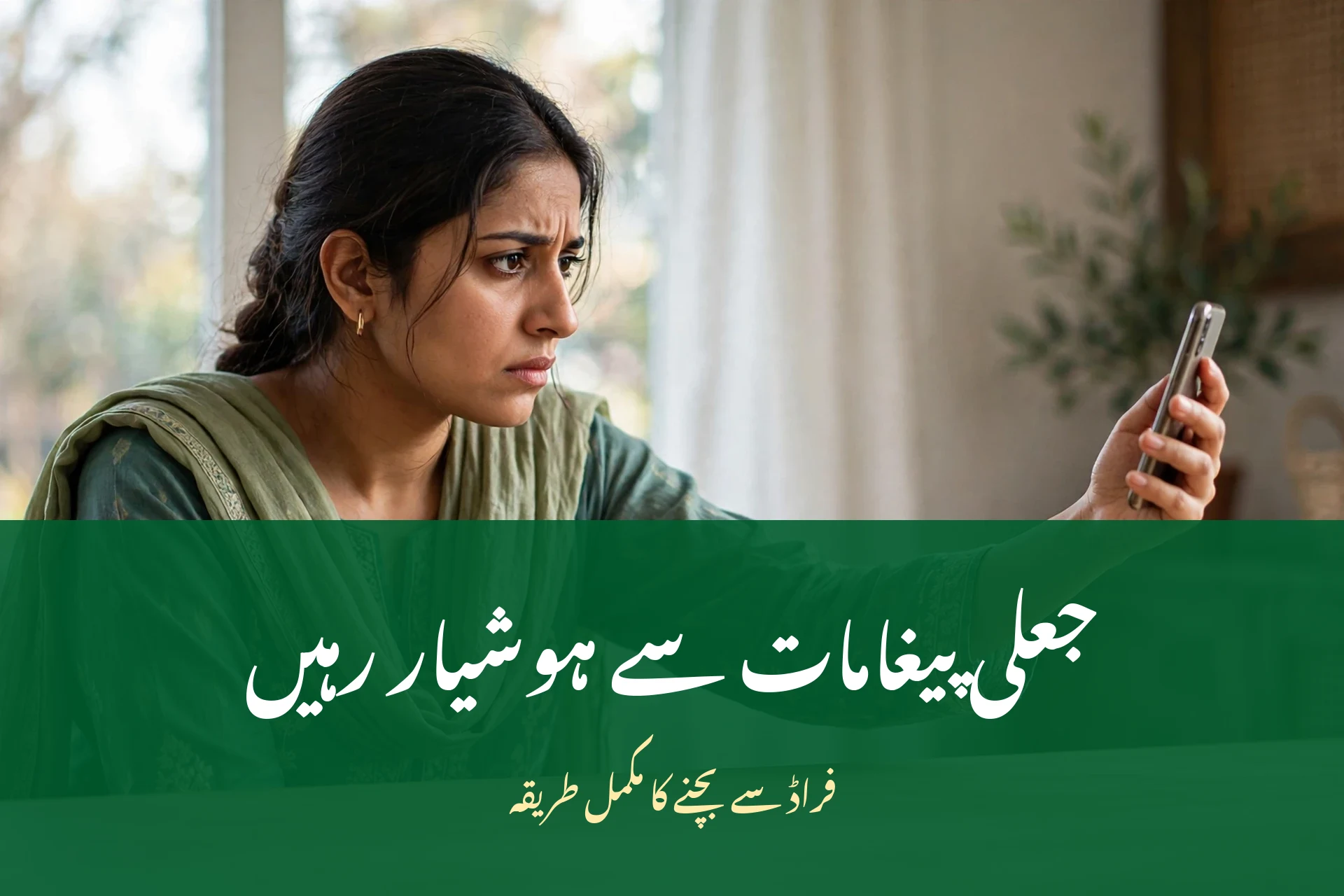
Every time the quarterly Rs. 14,500 installment is released, 8171 fraud attempts surge. Scammers know beneficiaries are waiting for their money, and they use fake SMS, phone calls, and even fake agents to steal cash and CNIC data. This guide breaks down the five most common 8171 fraud scams, the six warning signs to memorize, and exactly what to do if you have been targeted.
Quick Overview
| Detail | Information |
|---|---|
| Current installment, Oct-Dec 2026 | Rs. 14,500 per quarter |
| Installment from Jan 2027 | Rs. 18,000 per quarter |
| Only official SMS sender | 8171 |
| Official portal | 8171.bisp.gov.pk |
| Fraud reporting helpline | 0800-26477 (toll-free) |
| Cost of all BISP services | Free – never pay anyone |
| Online registration | Does not exist – registration is in person only |
Scam 1: Fake SMS from numbers that look like 8171
Real BISP messages only ever come from 8171 – never from a regular mobile number, no matter how official the wording looks. Scammers send messages claiming your payment is ready and asking you to “activate” it by calling a number or tapping a link. There is no activation step in BISP: if you want to check your status, open the 8171 web portal yourself by typing its address – never tap a link inside a stranger’s SMS.
Watch for small tricks in the sender name. A message from “BISP-Official”, “8171-Info”, or a mobile number starting with 03 is not from BISP, even if it uses the BISP logo or formal Urdu. Real messages only inform you of your status. The moment a message asks you to do something – call a number, click a link, share your CNIC, or pay anything – it is fake. Delete it and do not reply.
Scam 2: The “BISP officer” phone call
A caller introduces himself as a BISP officer and asks for your CNIC photo, bank account details, or a “registration fee”. A real BISP officer will never ask for any of these over the phone. Hang up immediately – and never share an OTP code with anyone who calls you, even if they already know your name or part of your CNIC number. Scammers often know a little about you; that does not make them official.
If the caller threatens that your payment will be stopped unless you cooperate, that threat itself is proof of fraud. BISP never blocks a payment because you refused a phone request, and no block is ever lifted by paying money over the phone.
Scam 3: The agent who takes a cut
Withdrawing your installment is completely free. Any deduction an agent or retailer takes from your Rs. 14,500 is illegal – and it is the most-reported BISP fraud of all. Some agents claim a “service charge”, a “tax”, or a “counting fee”. None of these exist. The full amount is yours.

If it happens to you, count your money before leaving the counter, note the shop’s name and location, take your full amount elsewhere if you can, and report the agent to the BISP 8171 helpline number 0800-26477. A written complaint at your district BISP office, with the date and the amount deducted, is even stronger. The same rule applies at ATMs and wallet retailers: ATM withdrawals are free, and wallet cash withdrawals carry only the fixed Rs. 280 charge – nothing more.
Scam 4: Fake Facebook and WhatsApp pages
Pages on Facebook and WhatsApp pretend to be BISP, offering “online registration” if you send your CNIC photo. BISP has no WhatsApp registration, and there is no online registration form at all – registration happens in person through the NSER survey at a BISP office. Sending your CNIC photo to strangers puts you at risk of identity fraud, including SIM cards or accounts opened in your name.
Never share your CNIC photo, your children’s B-Forms, or your bank details with any social media page, group, or “agent” online – even if the page has thousands of followers or uses BISP’s name and pictures. Follower counts can be bought; official status cannot. If you need to check anything, use only 8171.bisp.gov.pk, SMS to 8171, or the helpline.
Scam 5: “Your payment is blocked, pay to unblock”
Scammers claim your payment is blocked and demand a bribe to “unblock” it. Real blocks are only cleared through NADRA verification, a new survey, or biometric re-verification – never with money. Nobody can unblock your payment in exchange for a fee, and anyone who says otherwise is stealing from you.
If your payment genuinely is blocked, the fix depends on the cause: an expired CNIC needs NADRA renewal, a SIM problem needs an own-name SIM and a record update, and a biometric failure needs re-verification. Each of these is free and is done at an official office – never through a middleman who charges you.
The 6 warning signs of 8171 fraud, memorized in 30 seconds
- The sender is not 8171.
- You are asked for money or a fee of any kind.
- You are asked for your CNIC photo, bank details, or an OTP.
- The caller pressures you to act immediately.
- A link points anywhere other than 8171.bisp.gov.pk.
- You are offered registration by phone or WhatsApp.
If even one of these signs appears, stop. Do not argue with the caller, do not click, and do not pay. Teach these six signs to the women in your family – most victims are targeted precisely because nobody warned them.

Scam comparison at a glance
| Scam | What the scammer wants | What is true |
|---|---|---|
| Fake SMS | A call, a click, or your details | Real messages come only from 8171 and only inform you |
| Fake officer call | CNIC photo, bank details, OTP, fee | BISP never asks for these by phone |
| Agent’s cut | Part of your Rs. 14,500 | Withdrawal is free; any deduction is illegal |
| Fake social media page | Your CNIC photo for “registration” | No online or WhatsApp registration exists |
| Pay to unblock | A bribe to “release” your payment | Blocks clear only via NADRA, survey, or biometrics – free |
What to do if you were already targeted
Act quickly, and do not feel ashamed – these scams are designed to look official, and thousands of people are targeted every quarter.
- Stop all contact with the scammer immediately. Do not reply, do not call back, and block the number.
- Call 0800-26477 and report the 8171 fraud attempt, describing exactly what happened: the number, the message, and what was asked for.
- If you shared your CNIC photo, watch for SIM cards or accounts opened in your name. Check which SIMs are on your CNIC by sending your CNIC to 668, and visit your network’s franchise if you see an unknown SIM.
- If an agent took a cut from your payment, report the shop’s name and location so action can be taken, and keep any receipt or SMS as evidence.
- If you paid money, note the amount, the date, and how you paid, and include it in your helpline complaint or written complaint at the district office. Recovery is not guaranteed, but a reported case can stop the same scammer from targeting others.
How to verify a real BISP message in 10 seconds
When a message about your payment arrives, run this quick check before you believe it. First, look at the sender – it must read exactly “8171”, not a mobile number and not a name like “BISP-Official”. Second, read what it asks you to do: real messages only inform you of your status. The moment it asks you to call a number, click a link, share your CNIC, or pay anything, it is fake – delete it.
If you are still unsure, do not reply to the message. Instead, check your status yourself: send your CNIC to 8171 in a new message you write, or open 8171.bisp.gov.pk directly in your browser. What you see there is the truth, no matter what any SMS claimed.
Problems and fixes
| Problem | What to do |
|---|---|
| You tapped a link in a fake SMS | Do not enter any details on the page; close it, delete the message, and check your real status via SMS or portal |
| You shared your CNIC photo | Send your CNIC to 668 to check SIMs on your CNIC; report the incident on 0800-26477 |
| An agent deducted money | Note the shop name, date, and amount; report on 0800-26477 and at the district office |
| You paid a “fee” to someone | Report it with full details; never pay again – BISP services are free |
| You are unsure whether a message is real | Ignore it and verify yourself: new SMS to 8171 or 8171.bisp.gov.pk |
Tips to stay safe every quarter
- Save 8171 and 0800-26477 in your phone so you recognize the real numbers instantly.
- Never let anyone photograph your CNIC at a payment point or shop.
- Count your full Rs. 14,500 before leaving any counter, ATM, or retailer.
- Keep your phone and your SIM in your own hands during every transaction.
- Warn new beneficiaries in your area: fraud spikes in the first week after every installment release.
Frequently asked questions
I got an SMS from 8171 asking me to call a number. Is it real?
No. Real messages from 8171 never ask you to call another number or tap a link. They only inform you of your status. Treat any message that asks you to act as fake, and verify your status yourself instead. When in doubt, ignore the message and check your status yourself with a fresh SMS to 8171.
Is there any fee for withdrawing my installment?
No. Withdrawal is completely free at biometric ATMs and agent points, and any deduction is illegal. Wallet cash withdrawals carry only the fixed Rs. 280 charge; RAAST and online transfers are free. Keep your receipt or SMS as proof, and never accept a partial payment quietly.

Where do I report fraud?
Call 0800-26477 with the number, message, and details of what happened, or visit your nearest BISP tehsil office with the evidence. For illegal deductions, a written complaint at the district office is also effective. Write down the scammer’s number and the exact wording before you call, so nothing is forgotten.
Can BISP register me online or on WhatsApp?
No. There is no online registration form and no WhatsApp registration. Registration happens in person through the NSER survey at a BISP office. Anyone offering online registration for a fee or your CNIC photo is running a scam. The survey team records your household details in person, and no website can replace that step.
What if I already shared my CNIC photo with a scammer?
Stop contact at once, report the incident on 0800-26477, and check which SIMs are registered on your CNIC by sending your CNIC to 668. Visit your network’s franchise if you find a SIM you did not authorize. Also change nothing else in a panic – reporting quickly and checking your SIMs covers the main risk.
How do I know a Facebook page claiming to be BISP is fake?
Any page that asks for your CNIC photo, charges a fee, or offers online registration is fake, regardless of followers or logos. BISP’s official information comes through 8171.bisp.gov.pk, SMS from 8171, and the helpline – not social media pages. If a page already has your photo, report the page on the platform and then report the incident on the helpline.

An agent says the deduction is a government tax. Is that true?
No. There is no tax, service charge, or counting fee on your installment. Your full Rs. 14,500 is yours. Report any deduction with the shop’s name, date, and amount to 0800-26477. If the agent insists, leave with your receipt and report the shop the same day.
My payment is genuinely blocked. Can anyone unblock it for money?
No. Real blocks clear only through NADRA verification, a new survey, or biometric re-verification, all free at official offices. Anyone offering to unblock your payment for a fee is a scammer. Visit your tehsil office with your CNIC instead, where the real fix is free.
How can I protect elderly family members from these scams?
Teach them the six warning signs, save 8171 and 0800-26477 in their phones, and tell them one rule: BISP never asks for money, CNIC photos, or OTPs by phone. If they get a suspicious call, they should hang up and call you or the helpline.
Conclusion
Fraud follows every installment release, but every scam in this guide fails the same simple test: real BISP contact comes only from 8171, costs nothing, and never asks for your CNIC photo, bank details, OTP, or a fee. Memorize the six warning signs, verify every message yourself through SMS or the portal, and report anything suspicious on 0800-26477. Protecting your Rs. 14,500 starts with refusing the first suspicious request.
Sources
- BISP official website: bisp.gov.pk
- BISP 8171 web portal: 8171.bisp.gov.pk
- BISP helpline: 0800-26477 (toll-free)
Disclaimer
This guide is for information only and is not affiliated with BISP. Scam methods change over time; always confirm your own status through 8171 SMS, the official portal, or the helpline before acting. Anything not officially published is marked “Not officially announced” in this article.


7 thoughts on “8171 Fraud Alert 2026 – Fake SMS, Calls & Agent Scams”